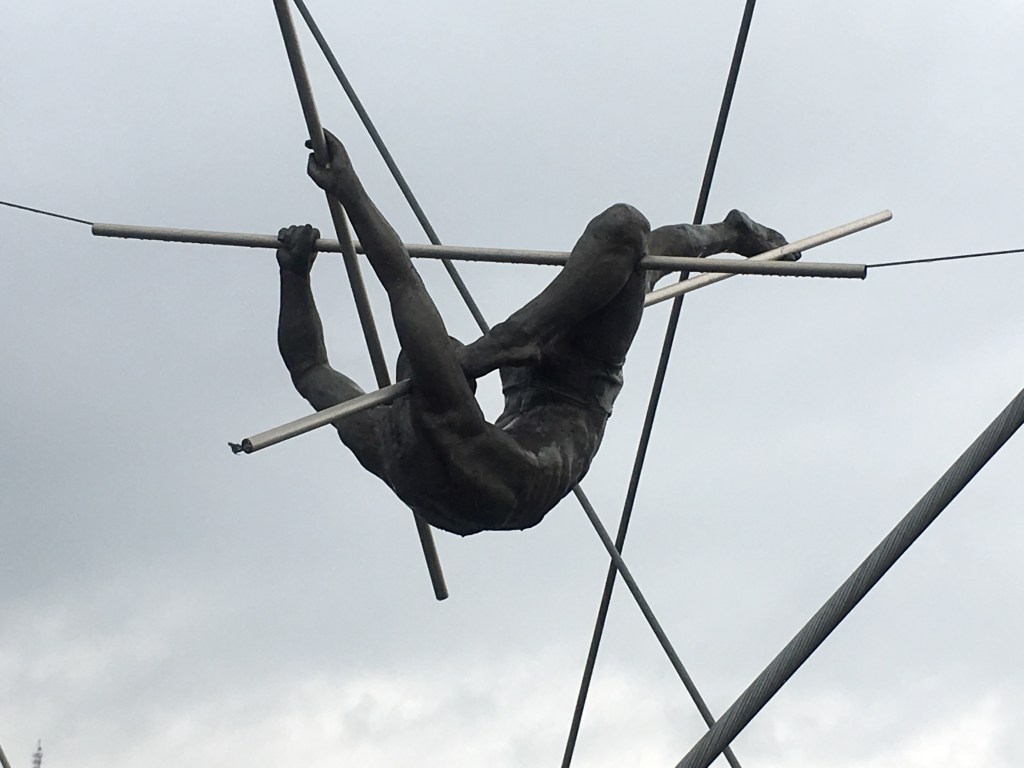
Today is my birthday. I was born on the 29th of Iyyar, 5710, and today is the 29th of Iyyar, 5784. I am seventy-four today. In one common categorization of our senior years, age seventy-four is considered the last year of “early” old age, a period that began when I turned sixty-five. In this blog, I would like to share some reflections on turning seventy-four.
I was born in Oklahoma City in the United States. Previously, my mother suffered a miscarriage, and some anxiety surrounded her pregnancy with me. But all turned out well. We didn’t stay in Oklahoma for long after my birth. My father joined a Texas Swing band that went broke somewhere in Texas. We traveled a lot and lived in thirteen states by the time I was in first grade. By then, I had a younger sister, and Mom told Dad we needed to settle down. We did, kind of. I went to first grade in Rhode Island, second in Virginia, third and fourth in Alabama, and then we moved to Jackson, Mississippi, where we stayed. I went to college in Jackson. After college, I got married and spent three years in the US Army in what was then West Germany.
After returning to the States, my career path was anything but straight. I had an undergraduate degree in piano performance with a minor in English. But I felt a strong desire to be “practical.” I studied and quickly abandoned Veterinary Medicine and Poultry Science, both practical occupations in Mississippi. Then, abandoning practicality, I switched to Philosophy, moved to Philadelphia, Pennsylvania, earned an MA with a focus on Aesthetics from Temple University, and promptly took a job in the computer field, where I worked until I retired in 2015. From all of this, I learned the need to be flexible, to adapt to changing circumstances, and to be able to do so quickly.
My former wife and I had two children, a girl, and a boy, both grown up now with careers and lives of their own. My daughter has blessed me with two grandchildren, twins, a boy and a girl. My most precious memories with my children have been those times in which they revealed, consciously or unconsciously, who they are and how they think. I provided security for them—food, clothing, and shelter; but it was their mother, I believe, that made them who they are: sensitive, kind, compassionate people. Once, they were playing in our backyard. Their mother wanted them to come in. She started counting from one to ten. At nine, she divided her count, nine and a quarter, nine and a half. I asked what she was doing. She said, getting the kids to come in. I called out the window for them to come in. I said I’m going to count to zero. They came flying in. The difference in their reaction was between responding to someone who spent a lot of time with them and someone they were a little unsure of. I think they needed both.
I have reached this age in relatively good physical condition. My father died of a heart attack at fifty-nine, and my mother died of an aneurysm at fifty-five. My most significant health problem to date occurred this past year, the onset of glaucoma, unfortunately, not discovered until after moderate to severe damage to the optic nerves in both eyes. Eyedrops have arrested the decline in vision. My wife has helped me adjust emotionally and physically. She buys me things to assist me in reading books, which has been my favorite pastime all my life. The other ongoing health challenge has been the struggle to maintain a healthy weight. Currently, I weigh fifty pounds less than when Beth and I got married. Not too bad.
When I retired in 2015, I made a serious attempt at writing fiction and poetry. I have been moderately successful. I spend at least part of each day writing. While I enjoy writing both fiction and poetry, I find the composition of poetry especially challenging. I admire the conciseness of expression required and the emphasis on form and the creation of something beautiful. Even so, most of my writing time is spent working on short stories. Currently, I have no desire to write a novel, nor, I should add, the discipline required to do so. The short story suits me fine. The story I am most proud of is “Yoineh Bodek,” published by Image. In 2020, the story received a Special Mention in the Pushcart Prize XLIV Issue. My collection of poems, “God’s Memory,” was published by Kelsay Books in 2021. The book’s cover is a photo my wife took on our visit to Poland at the Jewish cemetery in Warsaw.
My wife and I live in Beersheba, in the south of Israel. Beersheba is known as the gateway to the Negev, and it’s where I wanted to live. Living in Israel is a blessing for me, as challenging as it can be at times.
I started this piece by looking back in time, then moved to the present. I want to end with something I still hope to experience. Since my middle teen years, I have had a strong interest in the Japanese people, their culture, country, and history. One summer, I arrived in Canada to spend time with my former in-laws and my family. When I got to the family’s log cabin, I found it decorated in Japanese style. My former mother-in-law had also prepared a delicious Japanese vegetarian meal for me. Except for books, I’ve never been to Japan, though. So, that is one of the things I hope to accomplish while I can. One of the places I hope to visit in Japan is Hiroshima. I have a prayer to say there.
I should have read Hermann Hesse’s Siddhartha in my teens, by my twenties at the latest. But I didn’t. I’m enjoying the book in my seventies. I’m finishing it now and want to share with you something I understand at seventy-four, which I could not have understood at twenty-four. It is from the book’s chapter “The Ferryman.” The quotation is from Rosner’s translation. Siddhartha has been living and working with a ferryman. He is sharing with the man, Vasudeva, something he has learned about life from the river.
I reviewed my life and it was also a river, and Siddhartha the boy, Siddhartha the mature man and Siddhartha the old man, were only separated by shadows, not through reality.
Hesse, Hermann. Siddhartha (A New Directions Paperback) (p. 87). New Directions. Kindle Edition.
I am finding this truth in my own life, that only “shadows” separate the various stages of my life. I am grateful for all the people I know and have known over the years who make and have made my life what it is: my parents, my teachers and rabbis, certain women, especially my wife, my children, my grandchildren, and my friends. I am more than grateful to HaShem.
If you’ve gotten this far, thank you for taking the time to read this. In God’s mercy, I hope to be able to do another one of these when I turn eighty-four, the last year of “middle” old age. As my father used to say, “We shall see what we shall see.”
All the best,
Gershon

 Gershon Ben-Avraham
Sounds like you have been able to experience many places. I would bet there are lots of good stories along your way. If I can ask what took you to Israel?
LikeLiked by 1 person
When I first heard Bible stories in childhood, I was fascinated by the Holy Land, its people, history, geography, and even its animals, flowers, and trees. In 2015, my wife and I decided to move to Beersheba (Be’er Sheva) at the edge of Negev. It’s where we live today. Thank you, Gershon.
LikeLiked by 1 person
Thanks for sharing your life story with us!
LikeLiked by 2 people
You’re welcome thank you for reading!!
LikeLike