This past week I learned of the death of the father of my two best friends when growing up in Mississippi, a brother, and a sister. Their father was 99 years old when he passed away. His many friends and family had hoped to celebrate his 100th birthday with him, but it wasn’t meant to be. My Mississippi childhood is filled with fond memories of time spent with my two friends. And their father is a strong, steady, and comforting presence in many of those memories. I will miss him.
Just before my wife and I moved to Israel in 2015, we traveled to Mississippi and visited my friends and their father at his home. I enjoyed reminiscing with him. He told us an extraordinary story about being kidnapped as part of a robbery. He conveyed it in a compelling manner in which many Mississippians can weave a tale. I remember it very well and laugh about it whenever I recall it.
My friends are Christians and will mourn their father’s death according to the customs of their community. I, on the other hand, am a Jew. In Judaism, a child formally mourns the loss of a parent for eleven months. Compare this to the 30 days spent mourning the death of a spouse, a sibling, or a child. The lengthier time spent mourning the loss of a parent reflects the recognition of the significant role of a parent in a child’s life and the differences in the relationship’s nature. My heart goes out to my friends in the loss of their father. But I find solace in knowing that they have been blessed with a storehouse of his memories, and their lives are a powerful indication of their father’s enormous impact on them.
My mother died in November 1986. I was living in Philadelphia, and my mother was living in Florida. I had plans to spend Thanksgiving with her and spoke with her only a few days before she died. Instead of the holiday time I had expected to spend with her, I attended her memorial service. My father predeceased my mother. She remarried. As my former wife, my two-year-old daughter, and I were leaving to return to Philadelphia, my stepfather, standing at the door of their home, wanted to give my family something that belonged to my mother. He apologized for not having any of her private things left to offer but suggested a lamp on a table in their living room. At first, I declined. But he seemed intent on giving us something, so I agreed. I placed the lamp on an end table in our living room. It wasn’t long before it was accidentally knocked off the table and shattered into thousands of pieces. But I didn’t care. My mother’s material possessions were unimportant in the big picture: her jewelry, clothes, books, prayerbook, and Bible, those sorts of things. Except for one book, there is nothing in my home that my mother ever touched except me.
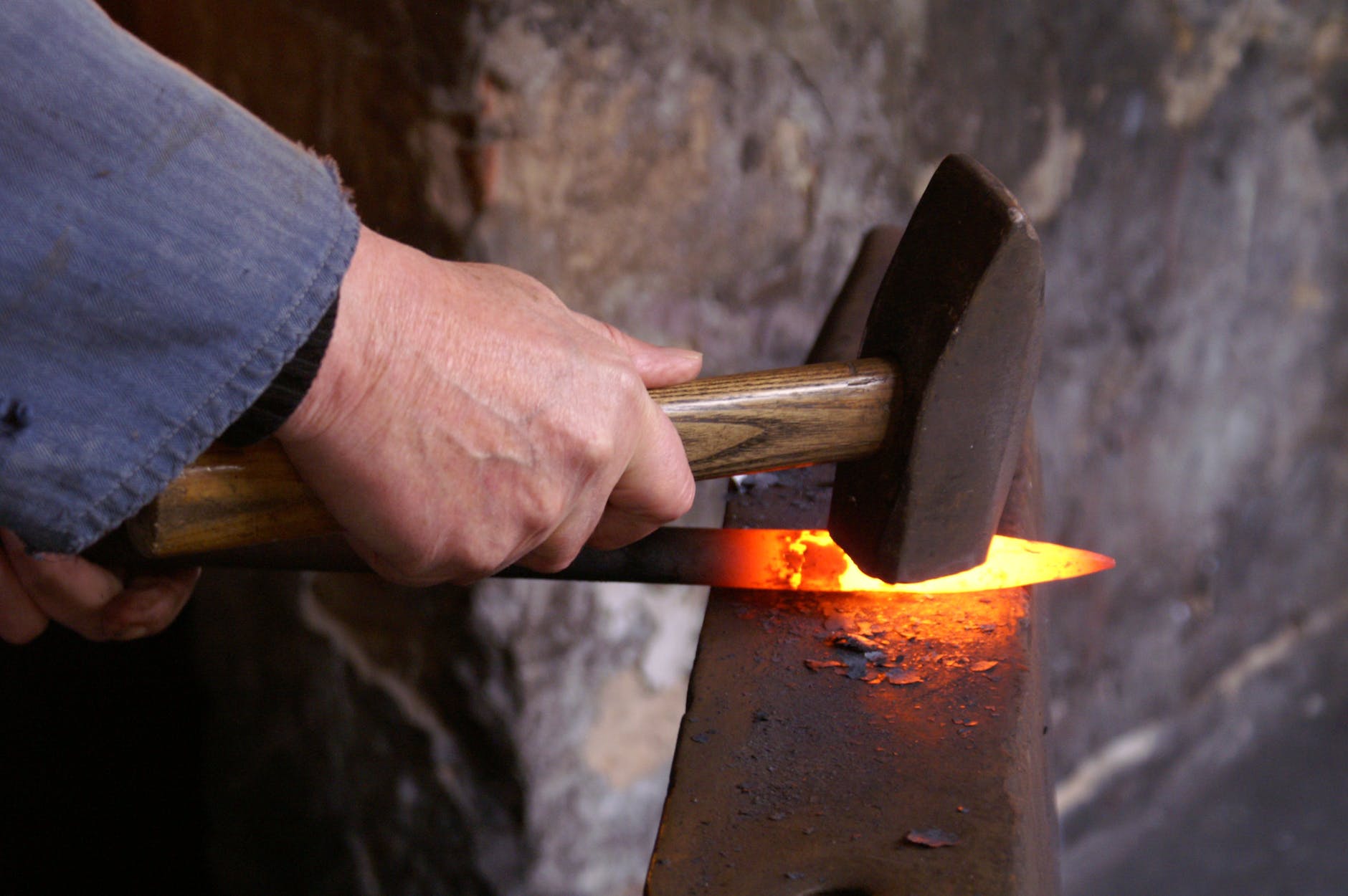
She held me physically as a child, embraced me when I left for the Army and got married, and often sang songs to me in her incredibly out-of-tune voice. But more importantly, she touched me emotionally. She filled my life with memories. She sparked a life-long interest in reading, writing, learning, and spirituality. I remember two books in her collection: Tobacco Road and God’s Little Acre, by the American author Erskine Caldwell (1903-87). And from time to time, she would recite poetry. One of the ones I remember best was Longfellow’s “The Village Blacksmith.” She would repeat the entire poem from memory. I still remember its opening stanza:
UNDER a spreading chestnut-tree
The village smithy stands;
The smith, a mighty man is he,
With large and sinewy hands;
And the muscles of his brawny arms
Are strong as iron bands.
It’s these things that I am grateful for and love most about my mother.
One particular memory concerns a bookcase. When I was a young teen, my collection of books had grown so large that there was no longer any room left in the family bookshelves in our living room. Mom suggested we get me a bookcase. We drove downtown to Penny’s or Sears, I don’t remember which one now, and I picked out a well-built wooden one. Mom spoke to the salesman and arranged for me to buy it on layaway. I made the first payment. She dutifully took me back to the store as I earned money from my paper route to make additional payments. I remember being very excited about the last trip; I had the final installment. We went to the furniture department to pay for my bookcase. It had been sold to someone else. What could we do? Mom worked with the salesman to find me another one I bought with the money I had already paid.
Recently, I wrote a poem in memory of my mother. I’m thankful to Evan Mantyk, President and Editor of The Society of Classical Poets, and his staff for publishing “Elegy.” The poem, as one might suppose from the name of the publishers, is written with meter and rhyme. It consists of three stanzas in Ottava Rima (ABABABCC).
An elegy is a contemplative and mournful poem about the loss of a person, place, or even a thing. Typically, an elegy expresses grief, sorrow, and admiration for the deceased. Elegies often explore themes of mortality and the passing of time. Here are names of some famous elegies written in English: “Elegy Written in a Country Churchyard” by Thomas Gray; “In Memoriam A.H.H.” by Alfred, Lord Tennyson; “Ode to a Nightingale” by John Keats and “When Lilacs Last in the Dooryard Bloom’d” by Walt Whitman. If you want to read my poem “Elegy,” you will find it here.
On Sabbath morning in the synagogue, we read Psalm 90 as part of the morning service. One of the verses contains the phrase, “we spend our years like a fleeting sound.” Our hope and consolation is that the next generation hears that fleeting sound and remembers it. I remember the sound of my mother, and I’m sure my friends remember the sound of their father.
All the best,
Gershon Ben-Avraham

 Gershon Ben-Avraham